
How to Clean a Baking Tray Without Damaging It?
Once you've fingers in the crunch of a home-baked loaf, giving that quick midweek traybake a go, you'll realize one thing for certain - baking trays do receive their fair share of battering. That’s why knowing how to clean a baking tray properly becomes essential. Burnt grease, caramelized sugar, cheese stuck on as well as oils which refuse to dry without leaving a stain - these are just a few of the calamities our poor trays have to suffer day in day out.
Don’t worry! There’s no need to scrub your darlings to death with chemicals that don't do a thing anyway. These will damage the surface, shorten the lifespan of your tray, and might even warp it so badly that everything burns unevenly from now on.
Here, we’ll describe exactly how to clean a baking tray without damaging the surface, no matter what it might be made of: enamel, non-stick, or stainless steel.
The Importance of Proper Cleaning

Before we get into methods, it’s important to know why the right cleaning matters:
- Keeps non-stick coatings intact
- Prevents rust from forming on exposed metal surfaces
- Keeps out scratches, which can hold trapped bacteria
- Ensures that the surface is even and your food cooks properly
- Extends the lifespan of your bakeware altogether
Baking trays and roasting tins are items that are generally used every week, if not every day, in a kitchen where ketchup from last year or milk dating back to before Queen Victoria are still part of the scenery. With a little care, though, this need not be replaced regularly.
How To Clean An Enamel Baking Tray?
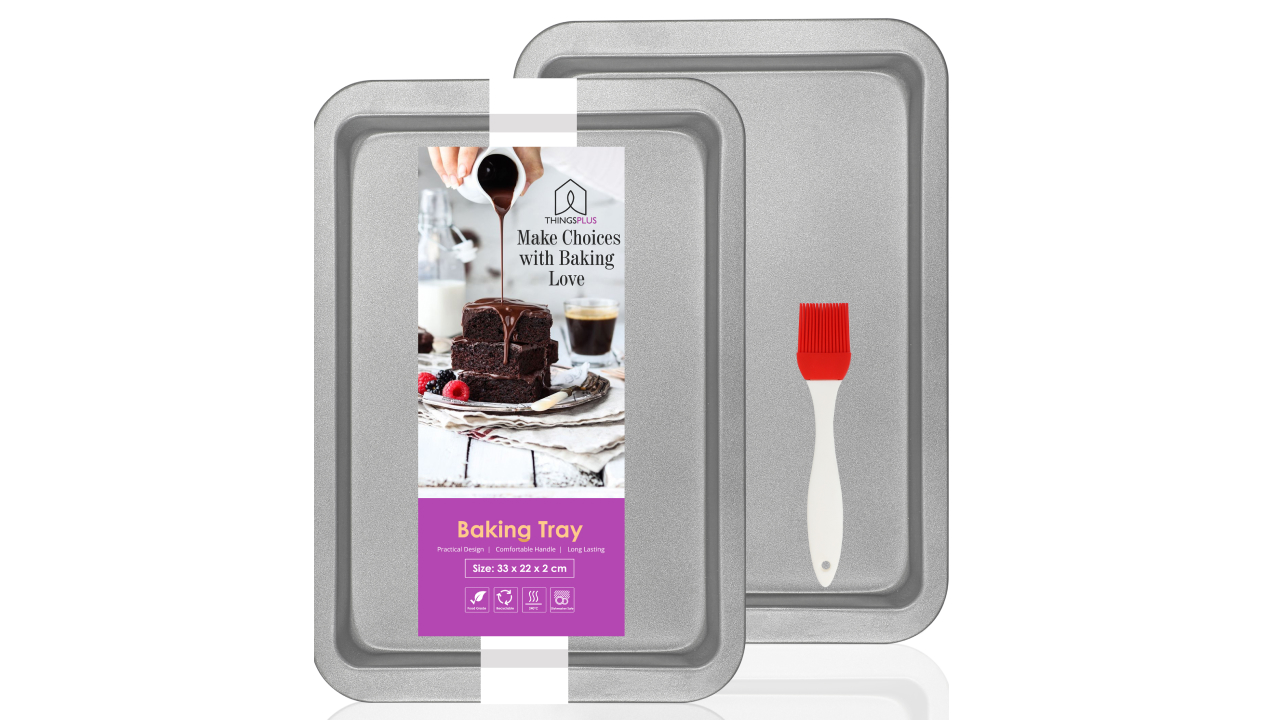
Enamel trays are sold in the UK to roast meats such as beef, lamb, and pork. That's because they're all the rage and durable with even heat.
Precautions;
- First, cool it down completely.
Never add cold water to a hot enamel tray. This might cause it to crack or warp.
- Soak in warm, soapy water.
Fill your sink with warm washing-up liquid and water (not boiling). Let the tray stand in there for 30-60 minutes.
- Use a soft sponge
Wipe off loosened residues from the tray with either a soft sponge or a microfiber cloth.
- Never use steel wool or metal scourers. Instead, use a baking soda paste.
Mix: 3tbsp baking soda, enough water to form a thick paste. Spread the paste over stained areas and leave for 1-2 hours before wiping clean.
What to Avoid with Enamel?
- Do not use abrasives
- Do not use metal scrapers
- Do not let sudden temperature changes
- Do not wash in the dishwasher (unless the manufacturer says it is dishwasher safe)
Enamel is tough, but it is not bulletproof - use it gently, and it will last many years.
How To Clean A Burnt Baking Tray?
Burnt baking trays are one of the most common kitchen complaints. You'll have to find a way to remove them once in a while. Otherwise, grease and food scraps can carbonize and stick firmly.
Here are effective but surface-safe methods.
Method 1 - Baking soda and vinegar
This method is good for most trays (except aluminum - vinegar can discolor it).
You will need:
- Baking soda
- White vinegar
- Warm water
- Soft sponge
Steps:
- Sprinkle baking soda over the tray.
- Spray or pour white vinegar over it.
- Let the fizzing reaction sit for 30-60 minutes.
- Gently scrub with a non-abrasive sponge.
- Rinse and dry.
Method 2 - Dishwasher Tablets and Hot Water Method
This method has been popular in British kitchens and is now spreading throughout the world, giving an extraordinary satisfaction, even if you start from scratch.
- Put the grill pan into the sink.
- Fill with very hot water.
- Put in a dishwasher tablet.
- Then sleep.
- Have a clean the next day.
Fats cannot “stick” in water; this is very effective for breaking down grease on roasting pans.
Method 3 - Bicarbonate of Soda and Lemon
For a fresher alternative to baking powder:
- Sprinkle the tray with bicarbonate soda.
- Cut a lemon in half and rub it over the surface.
- Leave for one hour.
- Rinse and wipe dry.
Dirt and odors will be banished, leaving behind only a lemon fragrance!
How to Get Black Stuff Off a Baking Tray?

It's not very hard for burnt food to escape, especially if one of those wonderful glazes on meats is already in the blackened mess. This is also true when cheese has been melted onto a baking tray and then left to cool.
Removing Materials Safely
These methods will not damage metal trays. Use boiling water (but carefully)
Salt Rub for Fresh Burns
- If the tray is still warm (not hot), sprinkle some coarse salt over burnt areas.
- Rub gently with kitchen paper.
- Salt here acts as a mild abrasive without scratching.
- Rinse off everything and dry.
Cream of Tartar Paste
Combine:
- Cream of tartar
- Water drips for a few minutes
Put on burnt areas, leave for half an hour, and wipe clean - this is gentle and effectively used to get rid of sticky residues.
What Not to Use on Baking Trays?
Using unsuitable tools can quite literally destroy your tray carelessly. Avoid:
- Steel wool
- Metal spatulas and skip these scrapers
- Harsh oven cleaners
- Bleach
- Scraping with a knife
- Abrasive powders
These things can scratch non-stick coating, chip enamel, cause rust, or prevent proper cooking performance. If you’ve invested time in choosing a baking tray of good quality, remember: surface maintenance should always come first.
How Often Should You Clean Baking Trays? (After Each Use)
Even if it doesn’t look too terrible, clean it after every use, wipe the tray with a damp cloth, and rinse it off. Grease gradually builds up as time goes on until eventually there is no easy way of getting rid of it at all except for stripping down to the metal.
Baking Tray Tips
We’ve listed down useful tips to increase the lifetime and quality of baking sheets.
Proper Storage of Baking Sheets
Storing baking trays properly would expand the lifetime and quality. Store them by using:
- Paper towels between trays.
- Soft liners.
- Vertical storage racks.
- Avoid knocking and bumping.
Avoid Overheating
Overheating your baking sheets might unknowingly damage them, as:
- Non-stick coating is damaged by extremely high temperatures.
- Metal turns yellowish discolor with age and heat.
- Always follow the temperature guidelines of the various brands.
Special Advice for Different Tray Materials
Cleaning the basics are similar, but there are different methods for different materials:
Non-Stick Baking Trays
- Always use soft sponges.
- Never use metal utensils.
- Avoid the dishwasher unless it is specified as safe.
- Avoid sudden temperature changes.
Stainless Steel Trays
- Can take a bit more of a scrubbing.
- Vinegar shines it up pretty.
- Dry immediately to avoid leaving water spots.
Aluminum Trays
- Avoid vinegar (could make it rough).
- With baking soda.
- Wash by hand only unless anodized.
What is Best for Households in the UK - Natural or Chemical Cleaners?
There can be many less dangerous than harsh chemical options in UK homes, such as:
- Baking soda
- White vinegar
- Lemon
- Salt
Most oven cleaners should actually be used only if they are recommended by the manufacturer as safe for your type of tray. Chemicals should only be considered as a last resort after all others have been tried and found wanting. Please note, the vast majority of damage is done when people rush their cleaning and scrub too hard. So go EASY on it.
Take Aways
The right cleaning method and regular care will keep your baking trays sparkling for years to come and in top shape, too. If you invest in quality bakeware like BakingTray Sheets, follow the care instructions closely, and it will reward you with perfect bakes every time.
0 comments